Growing up, my family had goats, usually two of them. We milked 'em morning and night, and got more than a gallon per goat on a good day. Mostly we sold the milk to families with kids who couldn't digest cow's milk (my brother was like that, one of the reasons we got goats in the first place. Goat milk is more similar to human milk than cow milk is, so it's really good for kids who just stopped breast feeding, or who have sensitive stomachs), but some people just liked having raw, unpasteurized milk.
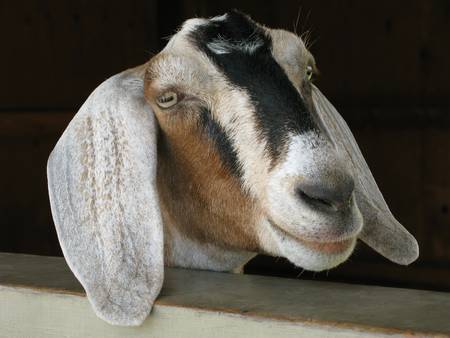 One of our goats was a Nubian, the kind in this picture. Pretty cute, right?
Picture found here.
We also had a Saanen and an Alpine.In some ways, the life of a kid with goats was a pain in the butt: having vacations hinge on whether you can find someone to milk while you're gone (and finding a neighbor in the suburbs who not only
can milk, but is willing to do it twice a day for even just a few days is... well, about as hard a you'd expect); being a teenager and having to milk/feed them in the morning when you want to be sleeping in, and in the evening when you want to be hanging out; and trying to seem like just a normal kid when there are little handfuls of alfalfa that fell in your pockets when you fed the goats this morning.
But raising goats had it advantages, too: the milk's really good, as long as the goats are fed right; there were no
unnatural hormones in the milk; blah blah blah we learned about hard work; and best of all- yogurt and cheese. My mom made lots of both, especially in the summer, when the goats produced the most milk (more daylight = more milk). Today, for the first time in more than ten years, I made goat cheese.
Chevre is the generic name for goat cheese, coming from the French word for goat. The kind of cheese most people think of when the think of goat cheese- that creamy, soft cheese that sort of has the consistency of a crumbly cream cheese- is the kind I made. and it couldn't be much easier:

Put a half gallon of goat's milk in a stainless steel pot (aluminum can change the taste). Slowly heat the milk to 195 degrees, stirring frequently so none of the milk starts cooking to the bottom of the pot. The milk will get frothy and start stinking the way that warm milk does, but it shouldn't boil.

Add 1/4 C lemon juice very slowly, stirring while you add it. As soon as it's all in there, though, stop stirring. Let the milk curdle. It'll look really disgusting.

Add a bit of salt and let it cool to 100 degrees.
Strain the curds from the whey for 2 - 4 hours, until it's the texture you want (I wanted ours to be more creamy, so I only strained it for about two hours). You can buy cheesecloth at kitchen stores, or sometimes at the fabric store, but my mom discovered something better: In the paint section at Home Depot, you can buy two paint strainers for about three bucks. They work as well as expensive cheesecloth, and they're reusable, cheap, and just the right size. They're good for jelly bags, too.
 You could hook the bag on the faucet and strain right into the sink, but then you'd have to do the dishes before you make cheese, and what's the fun in that? Just jerry-rig something like this, and those dishes can wait!
And there you have it! Homemade chevre! Luke and I are each going to get one half of the cheese to make a meal for the other. I'll show you what we come up with.


